'E' is for Energy
Written by Morgen Mills, former Program Coordinator, Labrador Institute
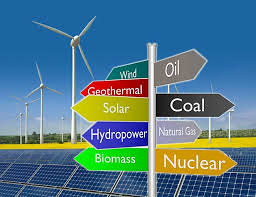 These days, most conversations about energy in Labrador begin with Muskrat Falls鈥攂ut the history of energy extraction in Labrador really started four billion years ago, with tiny, autotrophic life forms (such as those recently discovered ). We humans are newcomers, our lives made possible only by billions of years of advances in processes like photosynthesis and fermentation鈥攁ll of them evolved to harvest the energy in sunlight and environmental chemicals, and so to produce the ecosystems we know today.
Among animals from black flies to humans, eating and breathing are the energy-extraction methods of choice. Indeed human food systems in Labrador continually change, be they traditional, Indigenous, subsistence, or commercial. We also long ago perfected the art of making other animals do our eating, breathing, and working for us鈥攊n Labrador, particularly dogs鈥攂ut our most unique contribution has been technological, beginning with the .
Burning is not essentially different from eating (in that it converts fuel to heat), but fire allows us to process far more fuel than other animals can manage just by eating alone. A woodpile can store a lot more energy than a bear鈥檚 winter fat! And while the technique of out-sourcing our digestion process was not new either鈥攃aribou keep archaea in their guts for much the same reason鈥攎oving the process outside our bodies was a major step. Thus, from the earliest Maritime Archaic archaeological sites to present-day houses and cabins, wood-burning has proven to be an essential part of human energy harvesting in Labrador鈥攁nd .
Burning also extends to other fuels, from seal oil in the Inuit Kudlik to the whale oil rendered by the Basques at Red Bay (in arguably Labrador鈥檚 first factory). It is also the principal use of petroleum imported into Labrador from abroad. Petroleum drove the military aviation industry that led to the establishment of 5-Wing Goose Bay and still powers most of our communities鈥� electrical grids鈥攏ot to mention our vehicles on land, sea, and air. In fact the largest Labradorian-owned business today is principally based in petroleum delivery and transportation.
However, with technology鈥檚 massive acceleration of our four-billion-year energy extraction project comes a corresponding increase in pollution. Petroleum-burning is the primary driver of global climate change, which , and as the contamination of past military sites in Labrador shows, petroleum products can also have more directly harmful local legacies.
Labradorians have not historically neglected renewable energies, either. Both cod flakes and Inuit pitsik-making have long relied on solar power, for example, and the fishing schooner fleets were wind-powered for most of their history. For that matter, our biological advances should not be taken for granted: like many animals, we use sunlight to see.
Of course, 鈥渞enewable鈥� does not mean 鈥渉armless,鈥� and the great controversy in energy extraction in Labrador has undoubtedly been the transformation and even destruction of landscapes for the harvesting of hydroelectric power. Building dams and spillways and generating stations extrapolates our harvesting mechanisms so far beyond our individual bodies that governance, decision-making, and ownership become complicated questions, and hugely important matters for public debate.
Appropriately, only two resources are named in Harry Paddon鈥檚 鈥淥de to Labrador鈥�: wood and water power. The idea of placing a turbine at the foot of the Grand or Hamilton Falls was on the lips of virtually every nineteenth-century visitor to Labrador鈥檚 interior, but there was no local demand. In the end it was the world鈥檚 after the Second World War that led to hydropower development in Labrador, beginning with the Menihek station on the Ashuanipi River to power iron mines at Knob Lake, and continuing with Twin Falls for the mines at Wabush and Labrador City. Only later on did the provincial government embark on its much larger and more speculative mega-project at Churchill Falls鈥攚ith dreams of dams at Muskrat Falls and Gull Island to follow.
There are countless ways of looking at hydroelectric development, but whatever else it might be, in some sense it represents the latest step in a larger, overarching project shared across the biosphere, to extract energy from the sun. Plants photosynthesize; we eat plants, and other animals that eat them; we burn plants and their products; and we also use the sun ourselves, either directly, or by harnessing wind driven by temperature gradients caused by the sun, or by using water evaporated by the sun and precipitated into rivers to drive our turbines. Non-solar methods have never taken off in Labrador. Perhaps one day we will put turbines in the sea, and thereby get our power from tides driven by the moon, or perhaps geothermal generation will take off鈥攂ut in Labrador, the ground .
Either way, for better or worse, there may be some valuable humility to be found in the idea that as energy extractors, we stand on the shoulders, not of giants, but of micro-organisms much too small to see.
Back to all Encyclopedia entries